

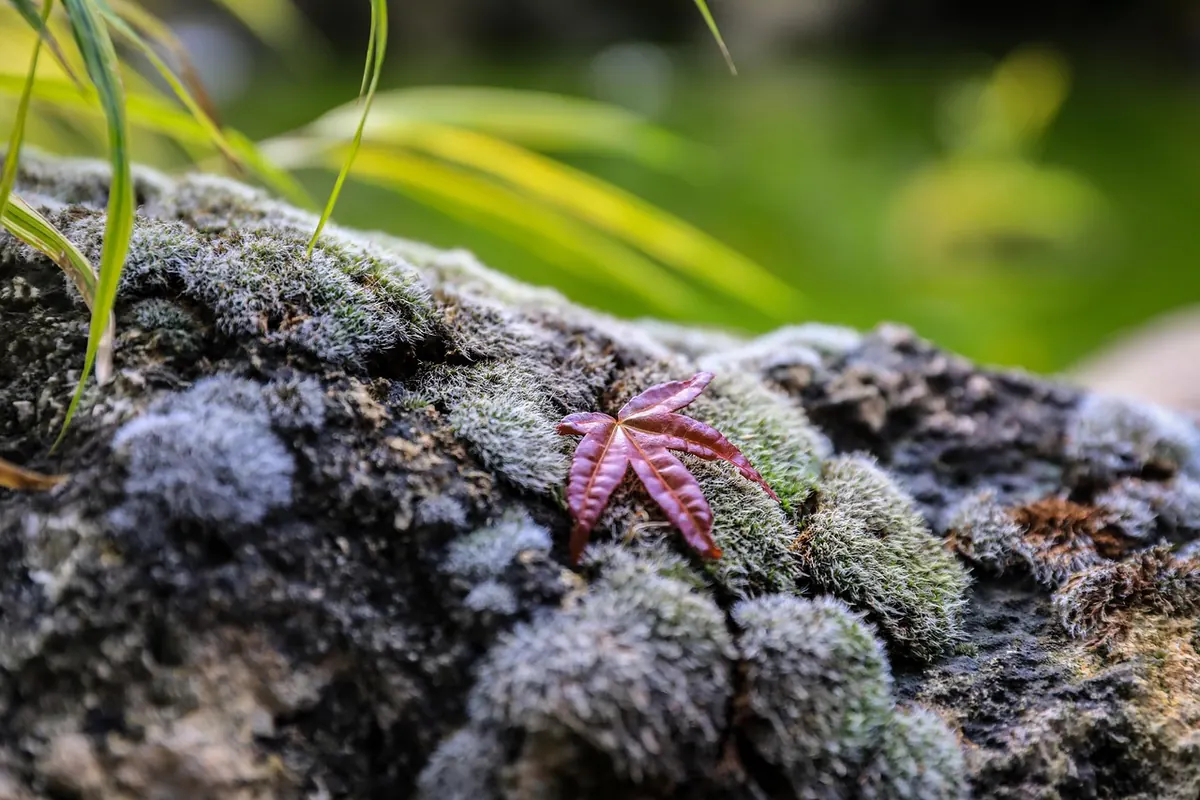




A mossy wall, a damp churchyard corner, a green line of moss along a kerb — these are easy things to walk past, and easier still to scrub away with a wire brush on a Saturday morning. But the UK's mosses are not just damp decoration. They are a whole group of plants with their own pressures, and the habitats they depend on are often the ones closest to us. The good news is that gardeners are unusually well placed to help: much of the damage is small in scale, and so are the fixes.
What mosses actually do
Most of us learn about moss as the thing that grows where nothing else will. That is close to the truth, but not the whole story. Mosses have no proper roots and no waxy cuticle of the kind flowering plants use to seal in water, so they absorb moisture and dissolved minerals across their whole surface. That arrangement lets them live on stone, mortar, bark and compacted clay — and it also makes them unusually sensitive to whatever is in the air and the rain.
A healthy moss layer holds water, keeps the surface beneath it cooler and damper, and shelters a small population of springtails, mites, rotifers and tardigrades. Birds collect it for nests. In one habitat, though, mosses do far more than that: they build the ground itself.
Peatlands: the moss that makes the landscape
Sphagnum, or bog moss, grows upwards at the surface while the older stems below sit waterlogged and starved of oxygen, so they break down only partly. Layer on layer, that half-rotted material becomes peat. Blanket bog on upland slopes and raised bog in lowland basins are the two broad types, and both depend on the living Sphagnum carpet staying wet.
Drainage for agriculture and forestry, planting trees on open bog, extraction for compost and fuel, burning, and increasingly dry summers all pull the water out of that equation. Without the living moss the peat stops forming and starts eroding, releasing carbon that accumulated over centuries. Restoration does work — blocking ditches, felling trees, rewetting the surface — but it is slow, and it starts with keeping the moss alive.
For gardeners, the practical link is simple: use peat-free growing media. Peat sold for pots is a piece of a habitat that takes an extremely long time to rebuild, and the phase-out of peat-based compost for amateur use in the UK is happening for exactly this reason.
Churchyards: accidental nature reserves
Old churchyards are among the richest bryophyte sites in lowland Britain, and mostly by accident. The ground was never ploughed, rarely fertilised and mown lightly if at all. The walls and headstones offer a spread of limestone, sandstone, slate and brick. North-facing stones stay damp through the summer. Add mature trees, undisturbed soil and low nutrient levels, and you have conditions that suit mosses which have vanished from the surrounding farmland.
Tidy less, and later
Well-meant tidying is the main threat. Strimming right down to the base of headstones scrapes off cushions that took decades to form. Herbicide sprayed along kerb lines and around graves removes the moss along with the weeds. Pressure washing brightens a memorial but strips a community of plants. Repointing with hard cement instead of a lime-based mortar traps moisture in the stone and can do more damage than the moss ever did.
If you help in a churchyard, check with the parish before starting work, and ask whether anyone has recorded the bryophytes there. Cutting paths and leaving the rest to grow longer is usually welcome; a full clean-up rarely is.
Urban walls: a habitat we keep scrubbing away
Walls are long, thin and everywhere, and lime mortar — porous, slightly alkaline, slow to dry — is close to ideal for moss. Look closely at a shaded stretch of brick, a stone retaining wall, paving joints, kerb edges, the base of a downpipe. A single damp wall in a quiet street can carry a surprising range of species.
Air quality has changed the picture. As sulphur dioxide levels fell following twentieth-century clean air legislation, some mosses returned to towns. The newer pressure is nitrogen, from traffic and farming, which acts like a fertiliser: it tips the balance towards coarse grasses and vigorous weeds and away from slow-growing bryophytes. Add hotter, drier summers and a fashion for pressure washing, and urban moss has a lot to contend with.
Moss is often blamed for damaging masonry. It is not eating the stone. Water, salts and unsuitable mortar are the real culprits, and a mossy surface simply stays damp for longer. Where a wall is already failing, that can add to the problem — but killing the moss rarely fixes the wall. There is a genuine safety point, though: steps and paths that become slippery need attention. Brush those, and leave the rest.
The pressures that add up
None of this is dramatic on its own. A scrubbed wall here, a drained field there, a patio cleaned each spring. What makes it matter is that mosses are slow colonists and poor competitors. They need continuity — the same damp surface, left alone, year after year — more than they need intervention. When habitats shrink into isolated patches, species that disappear from one wall have nowhere nearby to recolonise from.
Ways gardeners can help
- Leave moss where it is not a hazard. On walls, kerbs, pots, tree bases and shady paving, it is a plant community, not dirt.
- Skip the moss killers and biocide patio cleaners. A stiff brush and water deal with slippery areas without washing chemicals into borders and drains.
- Sweep leaves off mossy surfaces. Smothering does more harm than drought; a few minutes with a rake in autumn keeps moss in good condition.
- Keep things damp. Water shaded corners and wall bases in dry spells with rainwater rather than tap water, especially if you live in a hard-water area.
- Give it something to grow on. Stone, brick, terracotta, old timber, gravel and log piles all work. A north-facing wall or a damp corner behind a shed is prime real estate.
- Feed less. Fertilisers and weed-and-feed boost grasses that swamp moss. Low fertility suits it better.
- Help it spread locally. Crumble dry fragments from your own garden into damp joints on a shaded wall, keep them moist for a few weeks, and wait. Never collect moss from the wild — bogs, churchyards and nature reserves are exactly where it should stay.
- Record what you find. Even rough notes on what is growing where are useful. Your local Wildlife Trust or the British Bryological Society can help with identification.
Start with one wall
Pick a single mossy surface — a wall, a paving joint, a corner behind the bin store — and leave it alone for a season. Stop brushing it, stop spraying near it, keep it damp in dry weather. Then look at it properly with a hand lens. The texture, the tiny capsules on stalks, the way different species sort themselves by shade and dampness, all become obvious once you are not trying to get rid of them.
Nothing here needs a budget, a specialist or permission. It needs a decision to leave some things alone, and to notice what turns up when you do.
Photo: 김경복 / Pixabay