

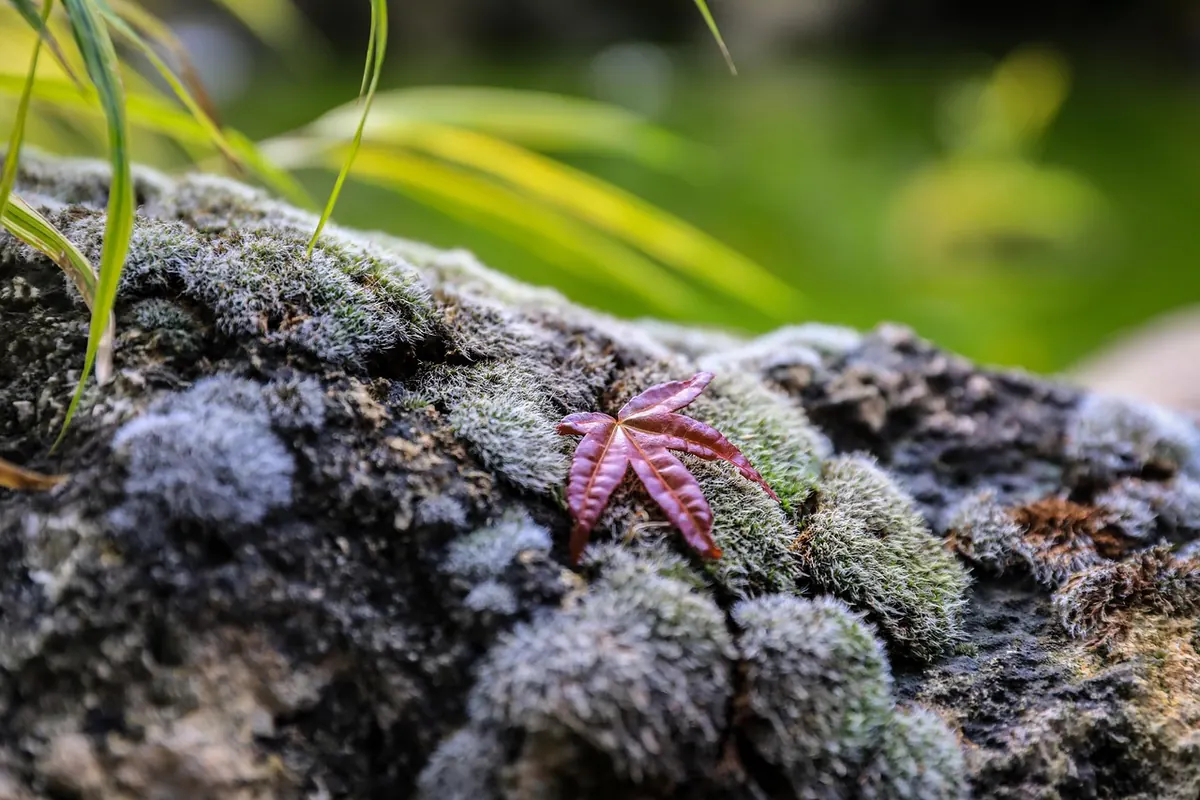

Sphagnum and sheet moss often sit side by side in the same online shop or garden centre tray, which makes them look like two versions of the same thing. They are not. One is built for waterlogged bog, growing upwards in soft, spongy cushions. The other creeps flat across logs and woodland floors, quite content to dry out between rain showers. Pick the wrong one for your container and you will spend months watching it brown off, wondering what you did wrong.
What you are actually buying
Before comparing anything else, check the label, because "sphagnum moss" covers two very different products.
- Live sphagnum — green, star-headed strands of Sphagnum species, sold in trays or clumps. This is a growing plant and it will spread.
- Dried long-fibre sphagnum — the stringy brown material used to line hanging baskets and bulk out substrate. It is dead. It holds water beautifully and makes a decent base layer, but it will never turn into a green carpet.
Sheet moss is a trade name rather than a species. In the UK it is usually Hypnum cupressiforme or a close relative, sometimes Thuidium. It grows sideways, knitting itself into a flat mat you can lift off a log in one piece. Cushion moss and mood moss are different plants again, and behave far more like sphagnum in their thirst.
Moisture needs: bog versus damp
This is where the two part company most sharply.
Sphagnum wants to be wet. Not misted, not merely damp, but genuinely wet most of the time, with humidity to match. It has no roots in the usual sense; it takes water straight through its cell walls, so it needs water in constant contact with the plant. Let it dry to a crisp and it will often recover if you rehydrate it slowly, but repeated dry spells leave it thin and pale.
Sheet moss wants damp and nothing more. It grows on tree bases, stones and soil where rain arrives, soaks in and then drains away. In a sealed container, sheet moss sitting in standing water goes soft, dark and sour-smelling within weeks. You want it to dry slightly between waterings — not to bake, but certainly not to float.
Water quality matters for both
Hard tap water leaves chalky deposits and slowly turns mosses dull. Sphagnum is especially fussy, because it acidifies its own surroundings and dislikes lime. Rainwater is ideal, filtered water is fine, and softened water is best avoided altogether because of the sodium.
Growth habits in a terrarium
Sphagnum grows from the tip upwards. The older material underneath dies and compacts into something peat-like, while the green heads march on. In a terrarium that means it climbs: over soil, over stones, over a small fern, eventually over the rim of your jar. It is slow but relentless, and it will happily smother anything smaller than itself.
Sheet moss grows outwards rather than up. It hugs whatever it is pressed against, spreading across cork bark, rock and compost while staying only a centimetre or two tall. It frames a planting instead of competing with it. If you want a floor that looks established and behaves itself, this is the one.
Closed terrariums
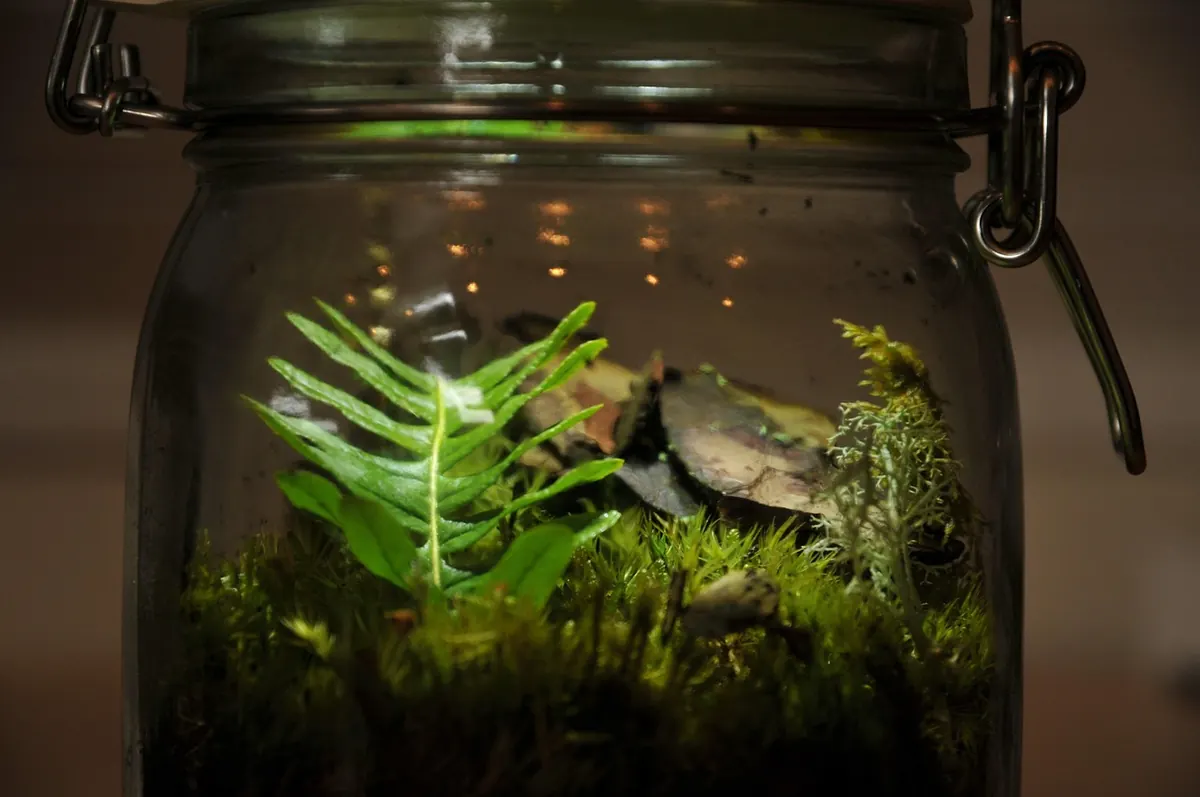
Both mosses can work in a sealed jar, but they play different roles. Sphagnum is in its element: high humidity, still air, steady warmth and no drying out. The risks are the opposite of neglect. Condensation can become heavy enough to block light, and sphagnum kept too warm and too wet grows leggy and soft.
Sheet moss does well on a false bottom where excess water can drain away, particularly on vertical surfaces such as cork or slate. Watch for black patches at the base of the mat; that usually means it has been sitting wet for too long.
A practical arrangement is sphagnum across the floor and sheet moss pressed onto wood or stone, so each plant sits where it performs best.
Open terrariums
In an open bowl, sheet moss wins by a wide margin. It copes with the lower humidity of a room, tolerates a missed misting and keeps its shape. Sphagnum in the same conditions will dry at the edges, shrink and gradually retreat.
If you want sphagnum in an open container, give it its own wet corner rather than scattering it about. A deep, water-retaining base layer under that section, watered from below rather than misted, keeps the moss in contact with moisture for longer. Treat it as a miniature bog and it will reward you; treat it as decoration and it will not.
Setting either moss up properly
Most terrarium moss failures come down to setup rather than care. Work through these steps and you remove most of the risk.
- Build a drainage layer. Two to four centimetres of pebbles or lightweight clay granules, with mesh or fabric over the top to stop substrate falling through.
- Add a moisture-retaining substrate. A peat-free mix of coir, bark fines and leaf mould suits both mosses. Sphagnum appreciates a little chopped dried sphagnum mixed in.
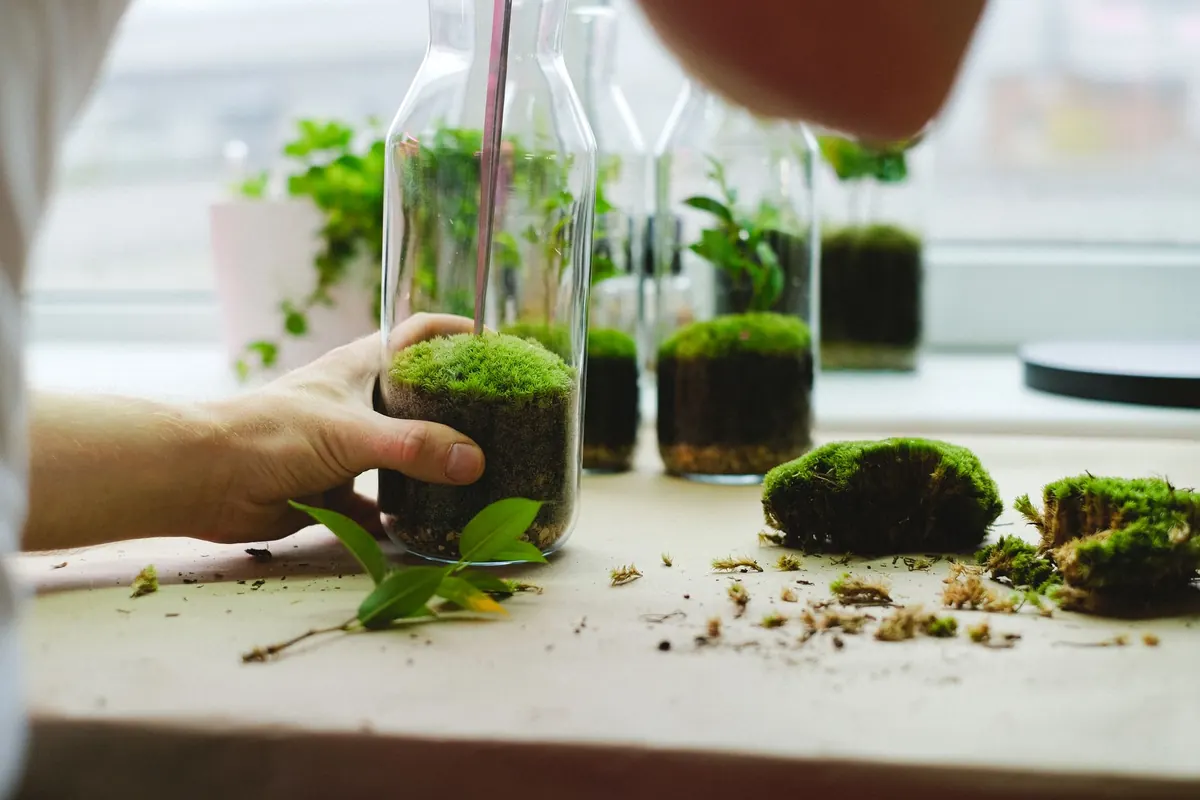
- Press the moss down firmly. Contact is everything. Air pockets under a sheet of moss are where browning starts, so firm it against the surface with the flat of your hand.
- Water with rainwater. For a closed jar, add enough that the drainage layer holds a shallow reservoir. For an open bowl, mist and judge by the weight of the moss rather than the look of the surface.
- Keep the light bright but indirect. A north or east windowsill suits most UK homes. Direct summer sun through glass will cook moss in an afternoon.
- Add springtails. These tiny creatures graze on mould and fungal growth, and they make a real difference in sealed containers.
- Leave it alone. Give a new terrarium a fortnight to settle before rearr
Photo: oschas0824 / Pixabay